Bath & Body Works Mobile App Redesign
Modernizing Mobile Commerce Through a Native-First Experience
I led the redesign of the Bath & Body Works mobile app, transforming a webview-based shopping experience into a native commerce platform. Working closely with Product, Engineering, Marketing, Creative, and executive stakeholders, I helped define the vision, establish priorities, and deliver a scalable foundation for future commerce experiences.
My Role
Lead Product Designer
Product strategy and experience vision
End-to-end mobile designer
Stakeholder alignment
Mentorship & design direction
Launch support & QA
The Team
Product
Engineering
Creative & Marketing
Content Management
Business Stakeholders
Impact
+20% YoY Mobile app traffic
50% share of all digital traffic
65% incremental digital revenue growth
The Challenge
Bath & Body Works had invested heavily in its mobile app, but much of the shopping experience still relied on embedded webviews. While functional, the experience felt disconnected from modern app expectations and limited the team's ability to create a seamless commerce journey.
Customer Pain Points
Inconsistent navigation patterns
Shopping flows that felt like mobile web
Reduced trust during checkout
Friction moving between experiences
Business Challenges
Limited ability to scale experienced
Technical debt from legacy approaches
Growing need for mobile commerce
Defining Success
This project was about more than redesigning screens. We saw an opportunity to establish a stronger mobile foundation, improve customer engagement, and create patterns that could scale across future initiatives.
Success Metrics
Increase conversion and engagement
Improve mobile adoption
Create scalable design patterns
Establish a stronger mobile identity
Support long-term commerce growth
My Approach
The project required balancing customer needs, business goals, and technical constraints. To move quickly while maintaining alignment, I worked closely with cross-functional partners throughout discovery, planning, and implementation.
Discover
Deliver
Define
We reviewed concept testing insights, customer feedback, and existing shopping behaviors to identify the biggest opportunities for improvement.
Evaluated customer feedback
Reviewed concept testing results
Audited current shopping experiences
Identified friction across key flows
As designs moved into production, I partnered closely with Engineering and Product to ensure quality and consistency while adapting to evolving requirements.
Designed core commerce experiences
Created scalable patterns and components
Supported implementation and QA
Guided iterative improvements
With a clear understanding of customer needs, we aligned around a vision for a native-first shopping experience and prioritized an MVP that could be delivered within launch constraints.
Defined experience principles
Established MVP scope
Prioritized customer-impact areas
Facilitated stakeholder alignment
Key Decisions & Tradeoffs
Balancing Customer Experience and Delivery Constraints
A significant part of this project involved making difficult prioritization decisions. With a fixed launch timeline and technical limitations, we needed to focus on delivering the greatest customer and business impact.
Native Checkout vs. Webview Checkout
Constraint
The original plan considered keeping checkout as a webview experience to reduce implementation effort.
Decision
I advocated for investing in a native checkout experience as part of the MVP.
Why It Mattered
Checkout is one of the most critical moments in the customer journey. Creating a native experience improved continuity, increased trust, and reinforced the value of shopping through the app.
Defining a Focused MVP
Constraint
Not every feature could be redesigned before launch.
Decision
We prioritized improvements to the highest-traffic shopping journeys while creating a roadmap for future enhancements.
Why It Mattered
This approach allowed us to launch meaningful improvements without sacrificing quality or delaying delivery.
Designing for Scale
Constraint
Legacy systems limited what could be delivered immediately.
Decision
We established reusable patterns and components that could support future releases.
Why It Mattered
The goal wasn't simply to launch a redesign—it was to create a foundation that could continue evolving long after launch.
Design Leadership
In addition to designing the experience, I played a key role in helping teams stay aligned throughout the project. Success depended not only on strong design execution, but also on communication, collaboration, and shared ownership across teams.
Leadership Contributions
Presented work to executive leadership
Mentored internal and partner designers
Partnered closely with Product and Engineering
Established mobile design patterns
Supported implementation and QA
Experience Highlights
Native Shopping Experience
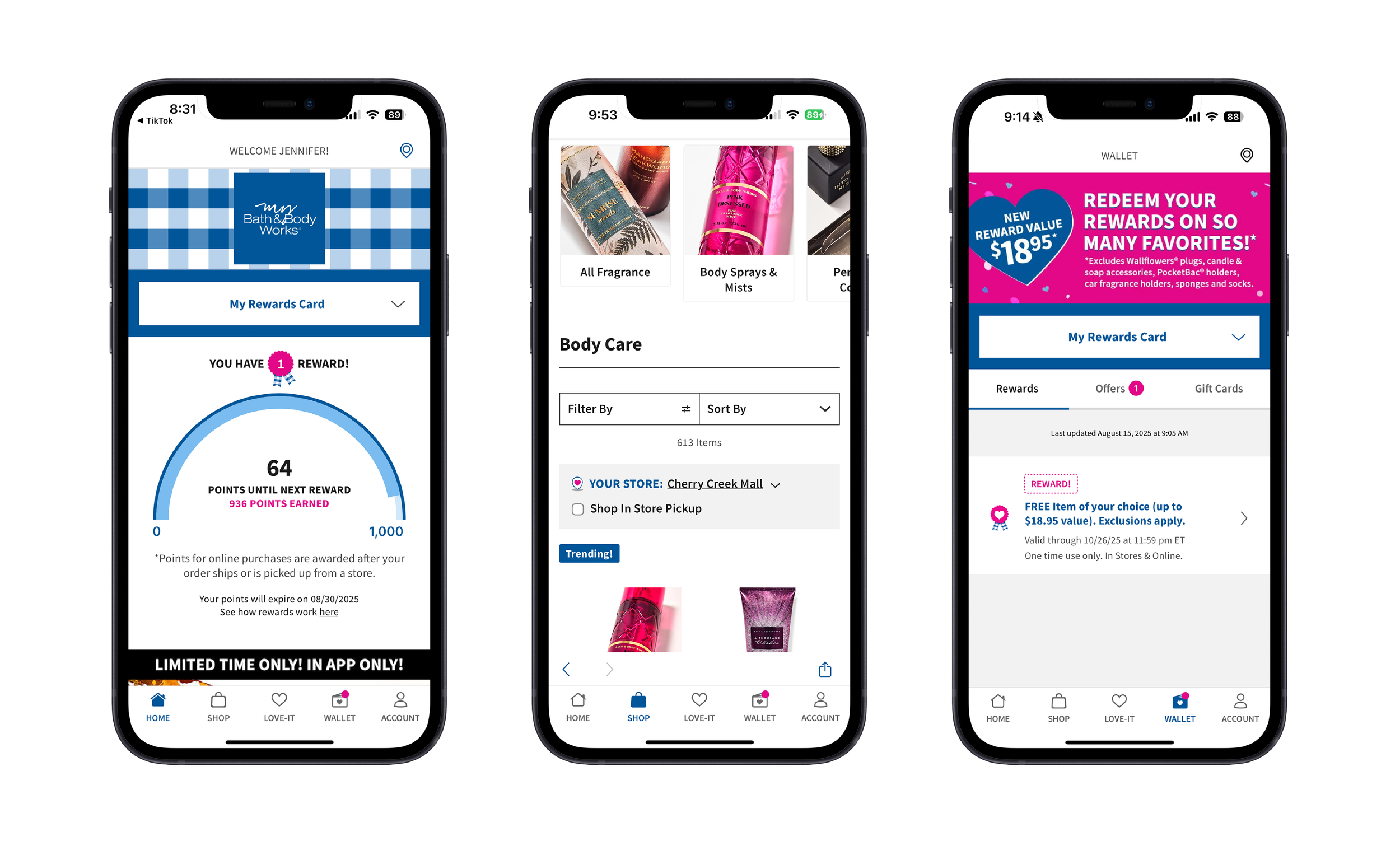
The shopping experience was redesigned to feel purpose-built for mobile, replacing webview interactions with intuitive native patterns that improved usability and engagement.
Highlights
Native navigation model
Updated product discovery
Improved browsing experience
Faster, more seamless interactions
Cart & Checkout
Shopping carts often become lengthy, particularly during promotional periods. We focused on improving visibility into key actions and reducing friction throughout checkout.
Highlights
Persistent checkout CTA
Order summary visibility
Improved payment experience
Reduced friction for large carts
Loyalty & Personalization
Loyalty plays a major role in customer retention and repeat purchases. We explored ways to make rewards easier to understand and more accessible throughout the shopping journey.
Highlights
Reward visibility improvements
Progress indicators
Simplified redemption
Stronger integration across shopping flows