Bath & Body Works Mobile App Redesign
Modernizing Mobile Commerce Through a Native-First Experience
Role: Lead UX Designer
Timeline: 1.5 years and ongoing
Platforms: iOS & Android
Team: Product, UX Design, Engineering, Creative & Marketing, CMS, Business Stakeholders
The Problem
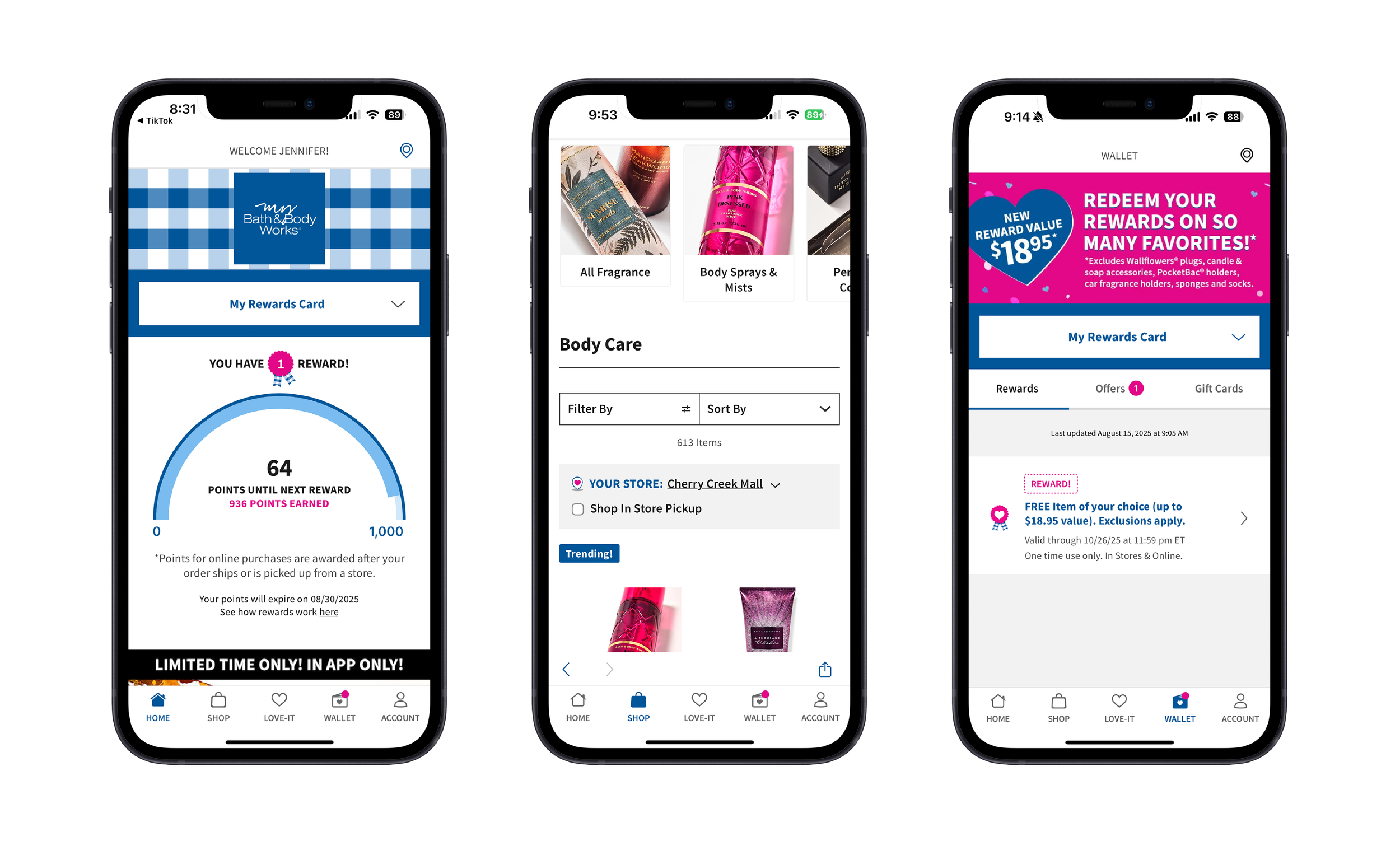
The existing app had not undergone a significant update in years, resulting in an outdated experience and friction across key user flows. Core shopping functionality relied heavily on webviews within the native app, which limited performance and created inconsistencies. The app was primarily loyalty-focused and was used almost exclusively for that purpose, while most customers preferred to shop in the browser due to a lack of intuitiveness within the app. As a result, we needed to rebalance the experience to drive both shopping engagement and loyalty, rather than prioritizing loyalty alone.
Goals & Constraints
Our goal was to increase conversion and engagement within the app by transforming it into a fully native experience that better reflects and evolves the brand’s design language. With this project, we were able to push the design system forward and further mature our design language. We aimed to create a seamless, immersive shopping journey while modernizing the overall experience through a native-first approach, ultimately improving usability across core shopping flows.
The project was shaped by several key constraints, including a fixed launch deadline that required clear prioritization and focus. We worked to define a strong MVP while thoughtfully planning for future releases, balancing immediate impact with long-term vision. Technical limitations tied to legacy systems also influenced what could be achieved at launch, requiring strategic decision-making throughout the process. As a result, we were not able to launch every page of the app at once, and instead took an iterative approach, continuing to refine and expand the experience post-launch.
My Role
As the Lead UX Designer, I defined the overall experience vision and led design execution across the entire app. I drove end-to-end UX strategy across all core user flows, ensuring a cohesive and user-centered experience. Through regular critique sessions and mentorship, I upheld a high standard of design quality across the team. I also aligned cross-functional partners across Product, Engineering, Creative, and Marketing, while collaborating with external teams to maintain consistency and quality. Throughout the project, I brought clarity and direction to complex, fast-moving, and often ambiguous situations, enabling confident decision-making and forward momentum.
Approach
Discovery
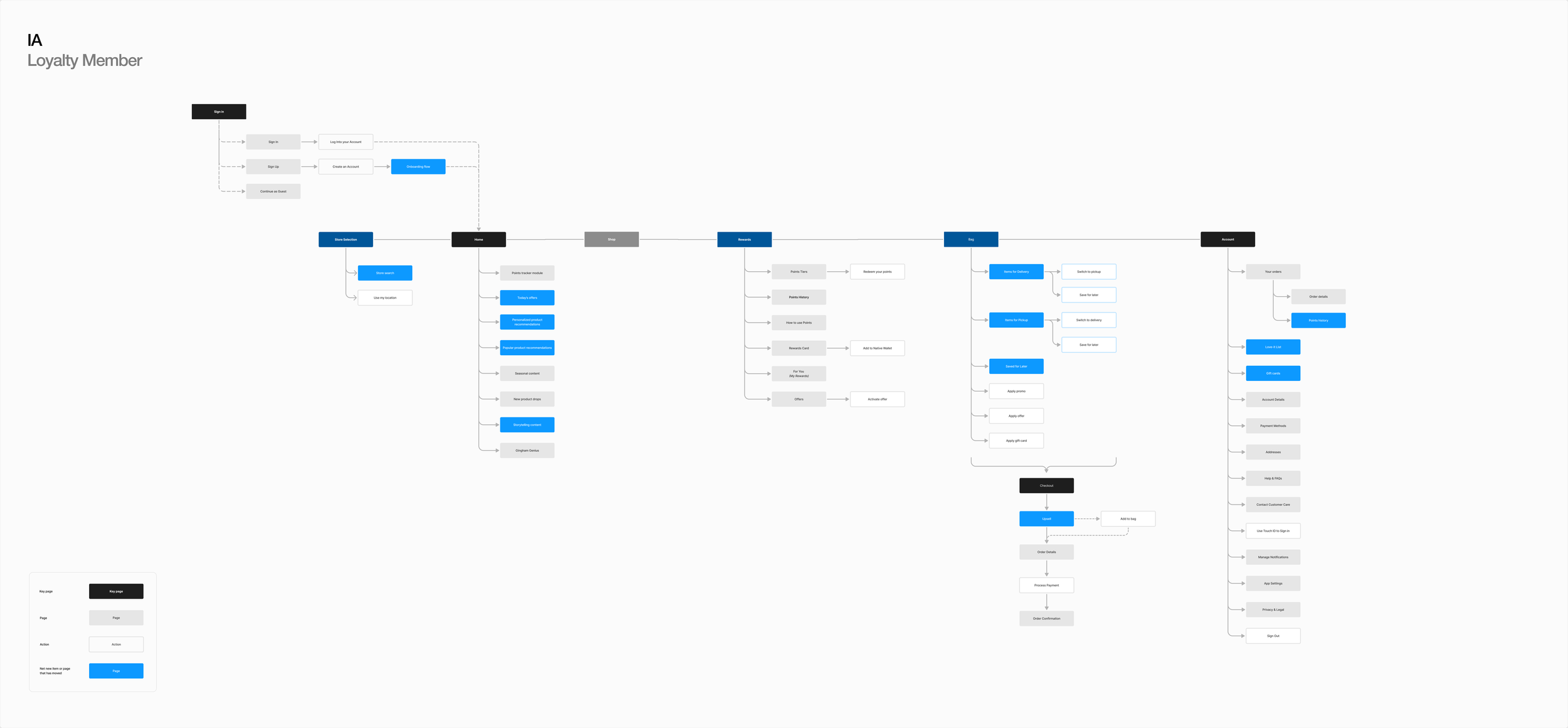
During discovery, I evaluated the existing app experience to identify key friction points, drawing on prior knowledge of our systems and Bath & Body Works customer behaviors. We recognized the need to reconfigure the information architecture holistically to create a more intuitive and seamless flow throughout the app. Because the existing shopping experience relied heavily on web views, we explored how to thoughtfully integrate and evolve those experiences within a native framework. We also conducted extensive pattern analysis across top-performing apps to understand industry best practices and inform our approach.
Define
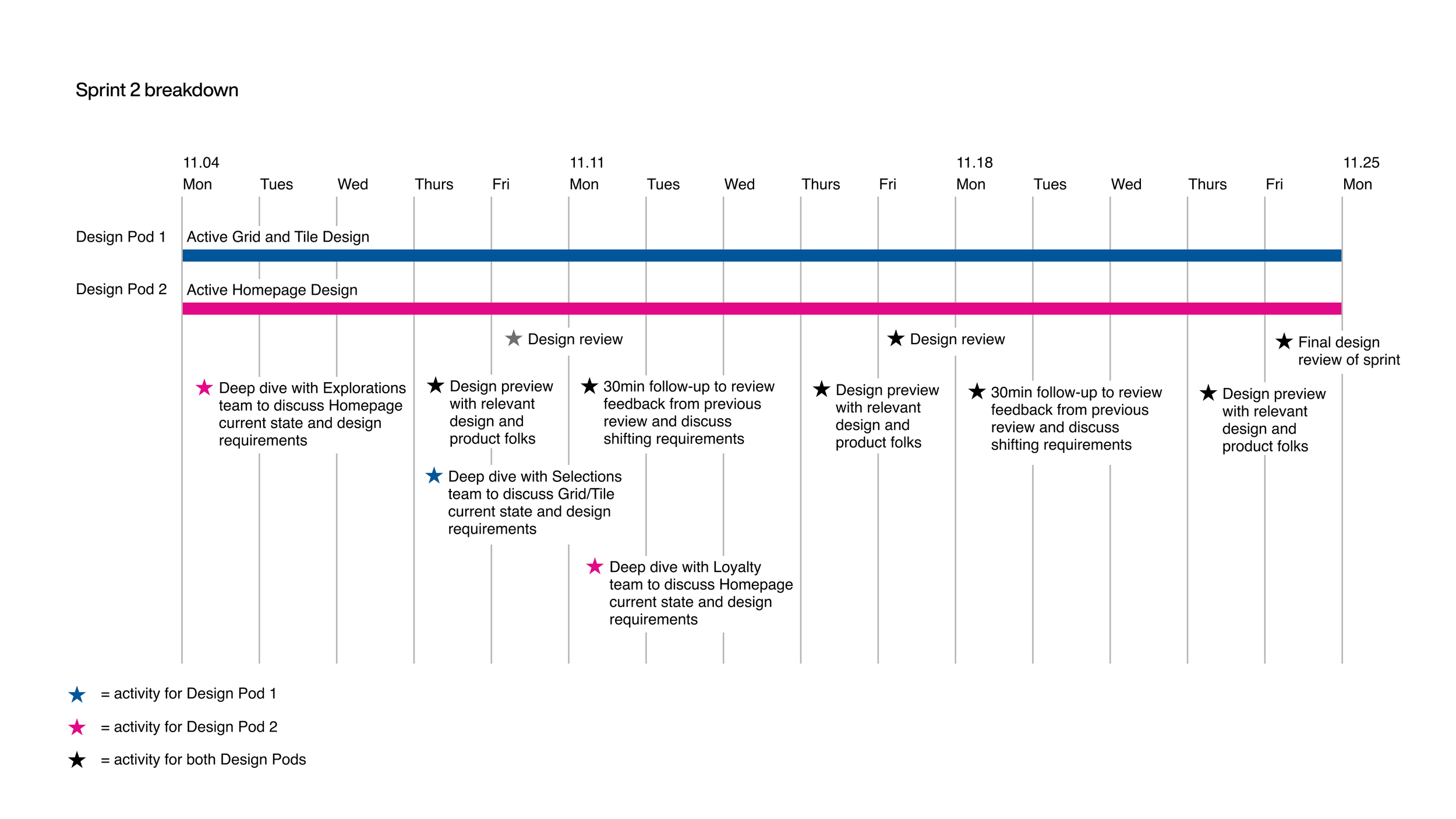
Given the scale of the project, we approached the work in focused, manageable phases. We started by defining foundational elements—such as the product list page layout—before refining more detailed components like individual product cards. We were also intentional about determining when to introduce new pages, with the homepage being a critical priority. Along the way, we identified the right stakeholders across Product, Engineering, Creative, and Marketing to ensure each area was thoughtfully informed and aligned. Ultimately, our goal was not just to refresh the app visually, but to create a significantly more effective and intuitive experience than before.
Before kicking off the project, we conducted a rapid round of design concepting to explore the app’s direction and validate our approach with users, ensuring we were aligned with their needs early on. This also allowed us to quickly align with executive stakeholders, gaining visibility and buy-in on the overall vision before moving into deeper design execution.
Design
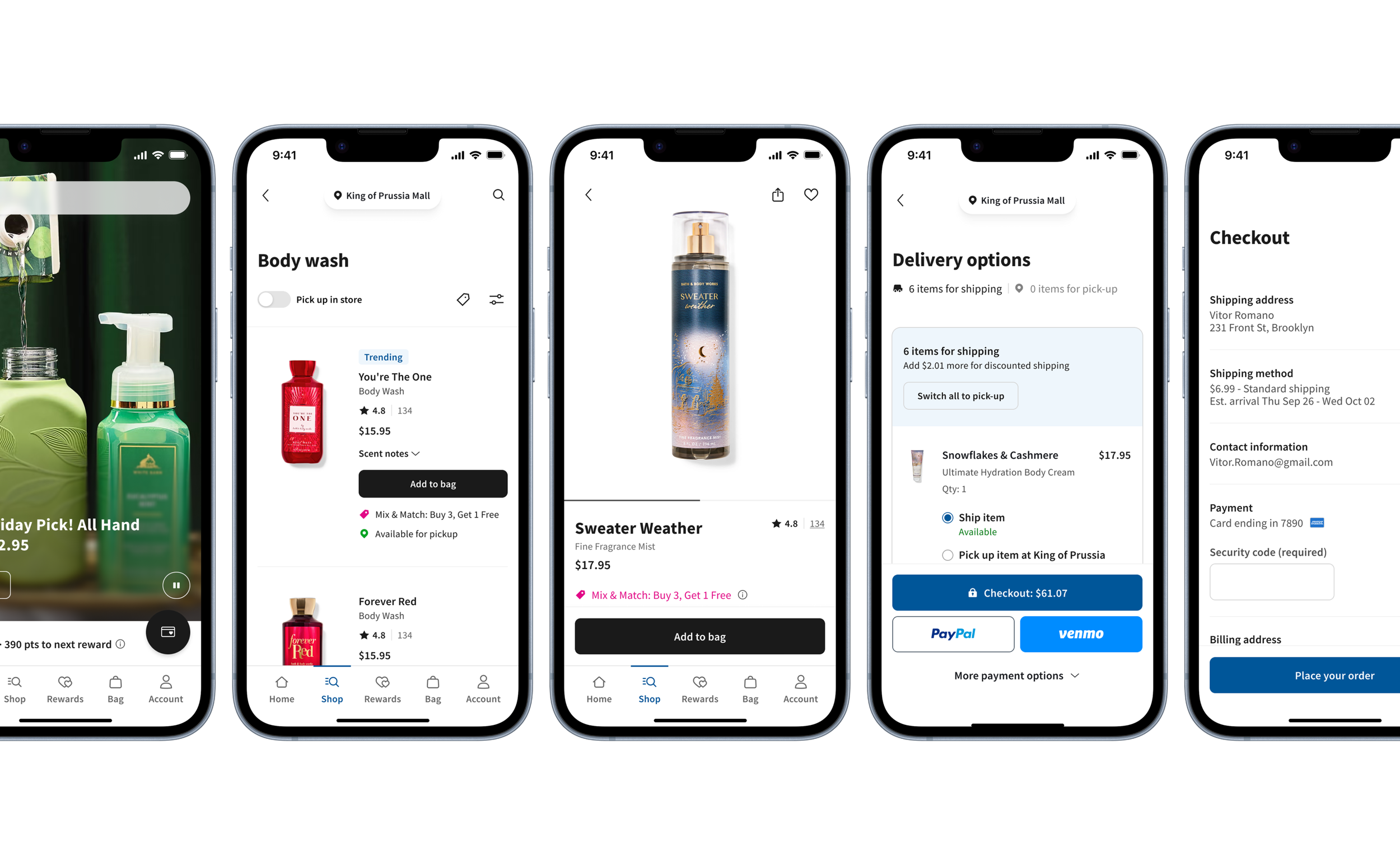
Starting from the ground up, we developed new patterns and end-to-end flows to create a more cohesive and intuitive experience, guided by a native-first north star. Our goal was to deliver a seamless shopping journey while thoughtfully integrating loyalty into the app. While we remained mindful of the existing website experience to maintain familiarity and consistency for customers, we also used this as an opportunity to push boundaries and evolve the product in a more native direction. Rather than simply reskinning existing components, we focused on the “why” behind each design decision to drive more meaningful, user-centered solutions. Throughout the process, we stayed closely aligned with cross-functional teams through regular working sessions and stakeholder reviews, ensuring we had the right input, context, and alignment to move forward with confidence.
From Design to Development
To ensure the redesign was successfully delivered, I worked closely with engineering partners from concept through launch. I collaborated with engineers to shape solutions that balanced user experience, business goals, and technical feasibility, aligning early on constraints, tradeoffs, and system capabilities to influence implementation decisions. I established clear design specifications and interaction patterns to support efficient development, and partnered through build and QA to ensure the final product met design intent and quality standards. Throughout the process, I acted as a bridge across design, product, and engineering to maintain alignment and momentum under tight deadlines.
Key Decisions & Tradeoffs
A significant part of this project involved navigating constraints and making intentional tradeoffs. With a tight timeline and limited resources, we defined a focused MVP, determining which features were critical for launch and which could be addressed in future iterations. This required prioritizing improvements to core shopping flows over expanding the feature set too broadly. One key decision point was the checkout experience—initially considered to remain a webview—but I advocated for building it natively given its importance as a high-traffic, conversion-critical moment in the retail journey. Moving forward with a native checkout ensured a more seamless and trustworthy experience for customers. Throughout the process, I balanced business goals, user needs, and technical feasibility, while aligning stakeholders with differing perspectives to move forward with clarity and confidence. Even six months post-launch, some parts of the app still reflect legacy patterns, but we’ve continued to iterate and evolve the experience, steadily improving it over time.
Impact
The app has had a strong and measurable impact on the business. While most digital traffic was previously driven through the website, the app now accounts for roughly half of all digital traffic. App traffic increased 20% year over year and now represents one-third of all mobile activity, while web traffic decreased by 6%, signaling a clear shift in customer preference toward the native experience. Since launch, app usage has driven 65% of incremental digital revenue growth, reinforcing its role as a critical driver of business performance.
Iterations
We continue to evolve the app through ongoing iterations and updates. Given fixed deadlines and limited resources, we’ve taken a strategic, phased approach to rolling out the redesign within the live product—prioritizing high-impact areas first while steadily improving the overall experience over time. This allows us to balance speed with quality, ensuring each update meaningfully enhances usability and performance.